

By IBP Paving. Published 9 October 2026.
What an overflowing soakwell looks like
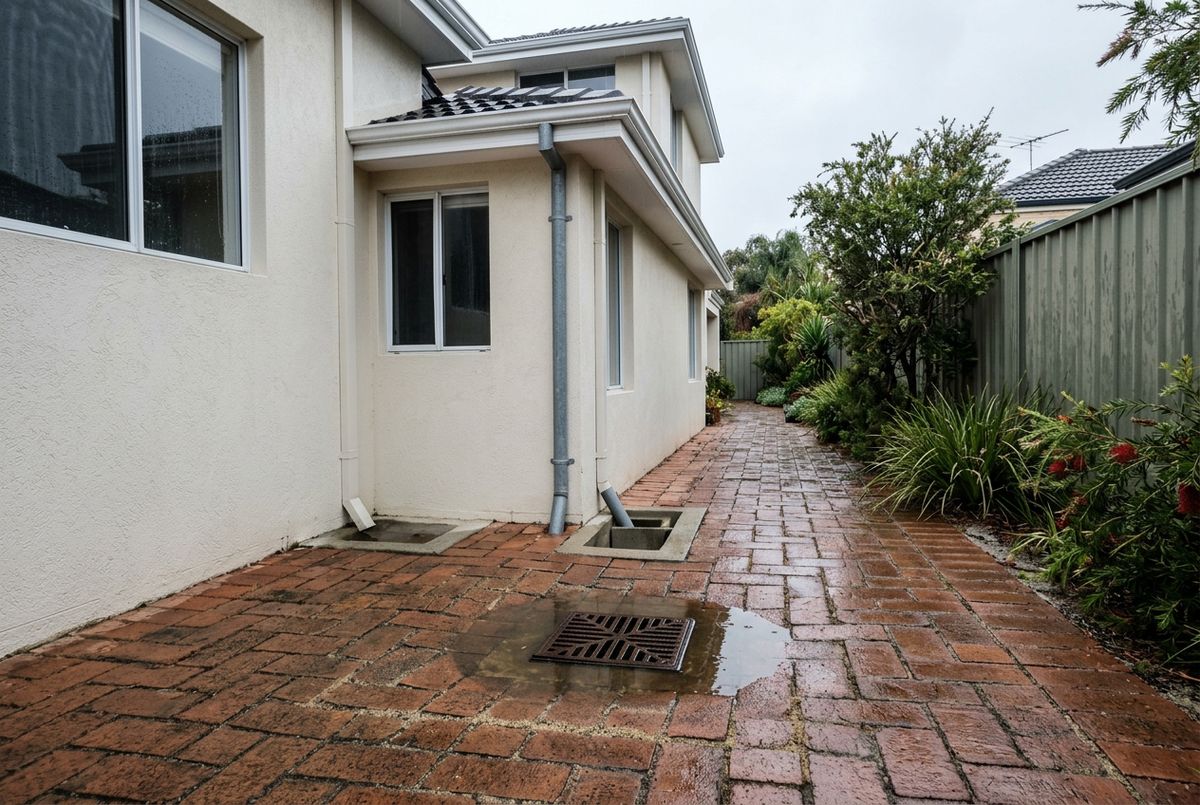
You usually find out from the ground, not the soakwell. Water bubbles up out of the downpipe during heavy rain. A grate in the paving sits under a puddle that will not clear. The lawn over the unit squelches for days. Sometimes the only sign is a patch of paving that has sunk a few centimetres over a couple of winters.
All of these mean the same thing: more water is arriving than the soakwell can store and release. Which of the six causes below applies decides whether the fix is an afternoon with a shovel or a replacement. Our soakwell installation and repairs page covers both ends of that range; this post helps you work out which end you are at.
1. The soakwell is undersized
The most common cause on houses built in the last 25 years. Builders often carry soakwells as a provisional sum and install the minimum, sized before the alfresco, shed or driveway went in. The City of Wanneroo and City of Joondalup table gives the roof or paved area each size serves: a 900 x 600 unit handles about 31 m2, a 1200 x 1200 about 111 m2. If a single 900 x 600 is taking two downpipes off a 60 m2 section of roof, it will overflow in any decent front.
The fix. Measure the roof and paved area draining to the unit, apply your council's rule, and compare. The City of Stirling formula is impervious area multiplied by 0.015 m3; Wanneroo and Joondalup use the table. If the unit is short, add a second soakwell in series next to it rather than replacing it. Our soakwell cost and sizing page works the sums for three lot sizes.
When to call. When the shortfall is more than one small unit, or the extra soakwell has to go under paving.
2. The soakwell is full of silt and sand
Every year a little roof grit, leaf litter and sand washes down the downpipe and settles in the bottom of the chamber. On older units that were never wrapped in geotextile, sand also migrates in through the slots from the outside. Either way the storage volume shrinks until a 1,300 L soakwell is holding 300 L of water on top of a tonne of wet sand. Sinking pavers around the unit are the giveaway, because the sand under the pavers is what has gone into the hole.
The fix. Lift the lid, dig or vacuum the silt out, check the inlet pipe is clear and reinstate. If the unit was unwrapped, this is the time to wrap it so the problem does not come back. Clean the gutters and fit leaf guards, because the roof is where the silt starts. Then put a yearly autumn check in the diary; our soakwell maintenance post covers the routine.
When to call. When the unit is under paving, when it is a concrete unit too deep to dig by hand, or when the pavers around it have already dropped and need a sunken paving repair at the same time.
3. The ground is clay or the water table is high
A soakwell is a buffer, not a bucket. It only works if the surrounding soil takes the water away between storms. In clay it cannot, and when the water table rises into the base of the unit in winter the soakwell is standing in the very water it is trying to get rid of. The City of Swan's drainage handbook says plainly that capacity is reduced where the groundwater table rises above the base, and in that case soakwells may not be suitable. The City of Gosnells requires 0.5 m clearance from the base of the soakwell to the maximum groundwater level or a clay layer, and sealed tanks where the ground cannot take water.
In Perth this shows up beside lakes and wetlands, on river flats, on the Guildford Formation clays of the north eastern corridor around Midland and Guildford, and on hills blocks. Across most of the northern sand suburbs it is not the problem.
The fix. This is the one cause where cleaning and adding units does not help. The City of Nedlands advice is to use shallow soakwells with a larger diameter where the water table is high, so the base stays above groundwater and the unit spreads the water over more soil. Where the ground is clay, councils such as Gosnells move to sealed detention tanks that release slowly to the street, and the City of Stirling allows holding tanks or infiltration basins as approved alternatives. Our post on soakwells in clay, limestone and high water table areas goes through the options.
When to call. Straight away, because the council will need to approve whatever replaces the soakwell, and the DWER Perth groundwater map is the first thing to check.
Source: City of Swan, Property Development Design Guidelines D12; City of Gosnells, Stormwater drainage; City of Nedlands, Stormwater drainage FAQs.
4. The soakwell has been crushed or has collapsed
A polypropylene crate installed under a driveway without a trafficable rating, or a concrete liner set on loose sand under a carport, can crack or drop under the weight of cars. Once the structure goes, the chamber fills with sand and the paving above it sinks in a bowl. The City of Stirling's criteria require any drainage structure under a driveway, carport or garage to be trafficable and set on an approved base precisely to prevent subsidence of the liner, and the Town of Claremont does not accept PVC soakwells where vehicles drive.
The fix. Replacement. A collapsed unit cannot be cleaned back into shape. Under paving the replacement should be a concrete unit or a trafficable rated unit on a compacted base, with a grated trafficable lid where the council requires one.
When to call. Always. This is machine work, and the paving reinstatement is where the job is won or lost.
5. The downpipe is disconnected or blocked
Sometimes the soakwell is fine and the water never reaches it. A downpipe that was cut during a renovation and never reconnected, a stormwater pipe that was crushed by a bobcat during landscaping, or a joint that has pulled apart will dump the whole roof section onto the ground beside the house. One Perth building inspection firm reports that downpipes discharging to ground rather than to a soakwell turn up in 22.1 per cent of its inspection reports, which is that firm's figure but a fair indication of how common it is. A gutter full of leaves does the same thing from the top.
The fix. Trace every downpipe during rain and watch where the water goes. Clear the gutters. Where a pipe is broken underground, dig it up and replace the section. The City of Stirling requires downpipes to discharge to grated inlets, which makes a disconnection obvious rather than hidden.
When to call. When the pipe run is under paving or you cannot find where the water is going.
6. Roof or paving was added after the soakwells went in
A patio, a garage, a granny flat or a freshly paved driveway each add impervious area. If the new downpipes were joined into the existing stormwater line, the original soakwells now serve a bigger catchment than they were sized for. Councils treat the added area as new runoff: the City of Stirling, for instance, requires runoff from paved areas to be stored separately from roof runoff, and paving counts in every council's sizing rule.
The fix. Size the added area on its own and give it its own soakwell, placed with the right setback from the new structure. For a paved driveway that usually means a grated drain at the low point running to a trafficable unit; our paving drainage page explains the layout.
When to call. Before the paving goes down. Adding a soakwell while the ground is open costs a fraction of lifting finished paving to put one in later.
Working out which cause you have
Start in the rain. If water backs up at one unit and the others are fine, suspect silt, collapse or size at that unit. If every unit struggles and the ground stays wet for days, suspect groundwater or clay. If the water never reaches the soakwell, it is the pipe. Then lift a lid in dry weather: an empty chamber points to size or ground, a chamber full of sand points to silt or collapse.
IBP Paving repairs, cleans and replaces soakwells across Perth's northern suburbs, and because we lay paving as well, the reinstatement is part of the job rather than someone else's problem. If you are not sure which of the six you have, send a photo of the wet patch and we will tell you what to look for next.