

What a lift and relay is and when it is the right fix
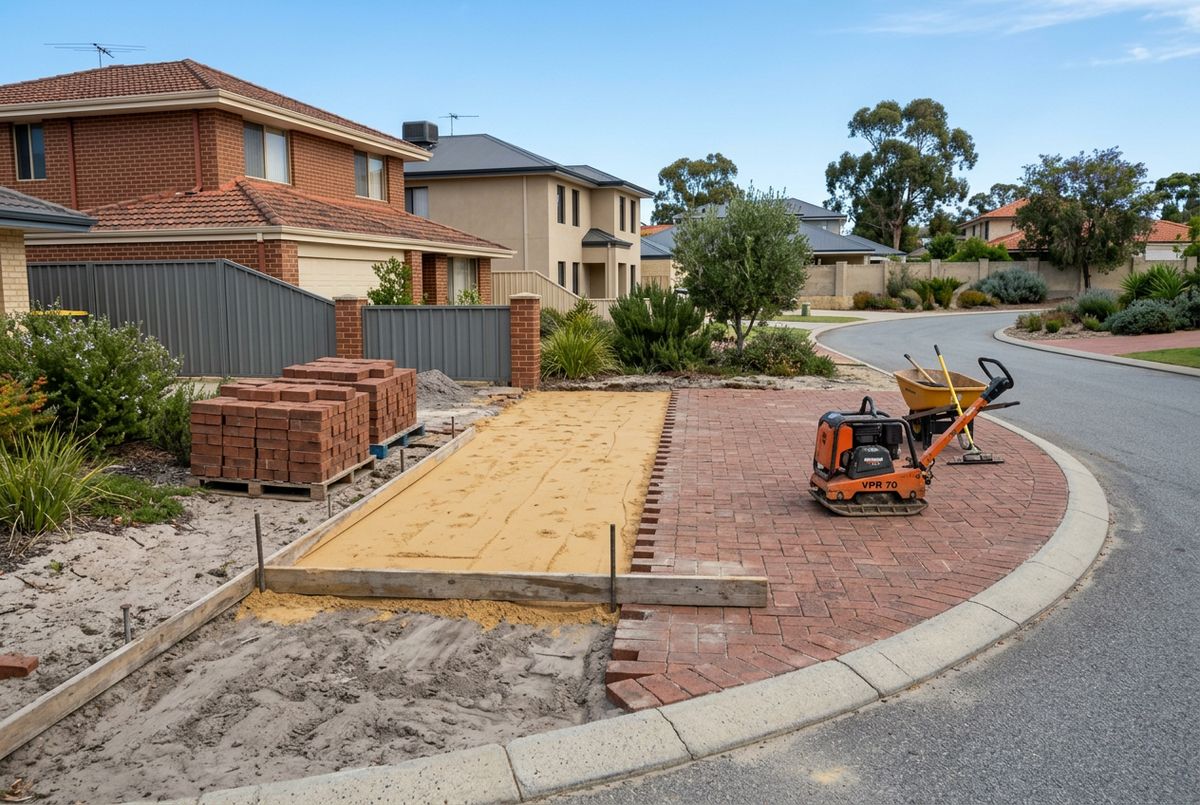
A lift and relay does what it says: the existing pavers come up, the bed under them is rebuilt and compacted, and the same pavers go back down flat. It is the normal fix for most Perth paving problems because of a simple mismatch in lifespans. Pavers last 30 to 50 years. The sand bed under them lasts 10 to 20. So a driveway laid in 2002 usually has twenty more years in the pavers and nothing left in the bed.
Relay when the pavers are sound and you can match any that need replacing. Replace instead when they are crumbling, flaking or discontinued with nothing close in colour. The jobs that bring people to this page are a driveway gone wavy, a patio that has settled toward the house, a pool surround that dropped once the backfill around the shell finished settling, paving pulled up by a plumber or the NBN crew and never put back properly, and gaps growing across a field where the edge restraint has failed. All of these are bed problems, and this page sits under paving repairs for that reason. If only one patch has dropped and the rest is flat, a spot repair is the smaller job.
Perth conditions: sand beds, water and what we find underneath
Almost all Perth brick paving is laid flexibly: washed yellow paving sand screeded over compacted natural sand, with road base added under driveways. Under Landsdale, Madeley and Ellenbrook the natural sand is deep, leached Bassendean sand. Under Joondalup and Duncraig it is Spearwood sand over Tamala limestone, and the caprock can be close enough to the surface to affect how we excavate.
What we find when the pavers come up is usually the reason the bed failed, and a relay is the one moment that reason is exposed and cheap to fix. Downpipes discharging onto the paving. A soakwell that is missing, too small or silted up. Ant nests through the bedding sand. No haunching along the free edges, so the field has spread. Soft fill that was never compacted. Putting the pavers back without fixing these is how a relay ends up being done twice. Where the roof water should go is on soakwells, and the diagnosis is in why pavers sink in Perth.
How IBP relays paving
- Inspect and quote. We measure the area and quote by the square metre, with bedding sand, skip hire, replacement units, edge works and any drainage fix itemised so you can see what each part costs.
- Lift. Pavers come up and are stacked in order where the pattern matters, such as herringbone or basketweave, with broken units set aside for replacement.
- Fix the cause. Redirect downpipes, add or replace a soakwell, treat ants, excavate and compact soft fill.
- Re-bed. Compacted road base under driveways, then screeded washed paving sand with a 1:60 to 1:80 fall away from the house.
- Relay. The pavers go back in the original pattern, with replacements cut in where needed.
- Compact, re-sand and haunch. The surface is plate compacted, the joints are filled with plain sand, a bound product such as pave set or polymeric sand, or a dry sand and cement mix where ants and weeds have been the problem, and every free edge is haunched in concrete so the field cannot spread again.
- Clean and seal once the paving has dried, if you want it. Details on paving sealing and cleaning.
Our lifetime workmanship warranty covers IBP's own work and the section IBP re-lays. We give the timing for your job with the quote; a patio is a different proposition from a 150 square metre driveway.
Re-sanding on its own
Joint sand does a quiet job. It locks each paver against its neighbours and stops the field moving as one. It also leaves: rain and wind take it, pressure cleaning strips it out in minutes, and ants carry it to the surface. Re-sanding on its own is a maintenance job and a sensible one, as long as the bed underneath is still flat. Once pavers rock underfoot or the surface undulates, new joint sand has nothing to hold against and falls straight through; at that point the bed needs doing, not the joints.
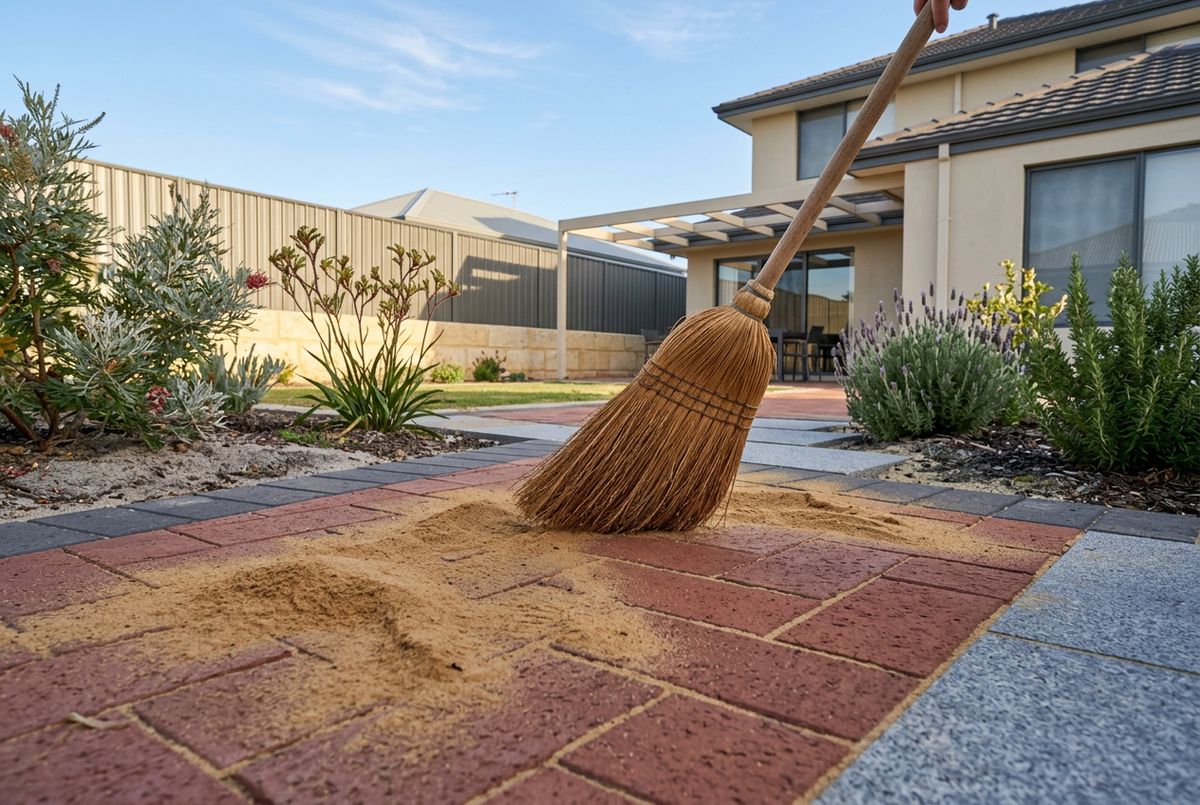
Perth has three joint fills. Plain washed paving sand is the standard and the easiest to top up. Bound products such as pave set and polymeric sand set firm after wetting and resist ants and weeds, so we use them where either has been a problem. A dry sand and cement mix does a similar job on paths and borders where a harder joint suits. The right one depends on what failed last time, and we recommend it per job.
What relaying pavers costs in Perth
These are indicative Perth industry ranges and principles, not an IBP price list. Lift and relay is priced per square metre and comes in well under new paving because the pavers are reused; the costs are labour, fresh bedding sand, skip hire and replacing any broken units. No published Perth per square metre relay figure exists in our research, so IBP quotes per job after a site look.
For comparison, new supply and lay paving in Perth runs roughly $75 to $210 per m2 depending on material, according to a third party 2026 Perth cost guide, so the saving from reusing the pavers is real. What moves a relay quote: the area, the pattern (herringbone takes more labour than stretcher bond), access for a skip and plate compactor, how many units need replacing, and whether a soakwell or drainage fix is part of the job. See paving cost in Perth and soakwell cost.
Source: perthpavers.com.au Perth paving cost guide (2026), third party. Indicative Perth industry ranges only.
Relay, spot repair or replace
- Spot repair for one sunken area with a local cause: sunken paving repair.
- Full relay when the whole bed has gone but the pavers are sound: this page.
- Replace when pavers are crumbling, chipping across the area, salt affected or discontinued with no match: paving replacement.
- Roots lifting a line of pavers: pavers lifted by tree roots.
Relaying is also how a driveway is put right after a crossover has been rebuilt or a trench cut through it for services. The full driveway picture is on driveway paving.
Where we relay paving
Relays follow first generation driveways reaching their twenties. Landsdale, Darch and Madeley are late 1990s and 2000s estates where mid life driveway relays are now routine. Hocking and Tapping were subdivided through the 1990s and 2000s. Ellenbrook's early villages are at 25 to 30 years and into their first relays, and Currambine, developed from the mid 1990s, is at the 30 year mark. See Landsdale, Madeley, Hocking, Tapping, Ellenbrook, Currambine and the full list of areas.