

What basketweave paving is
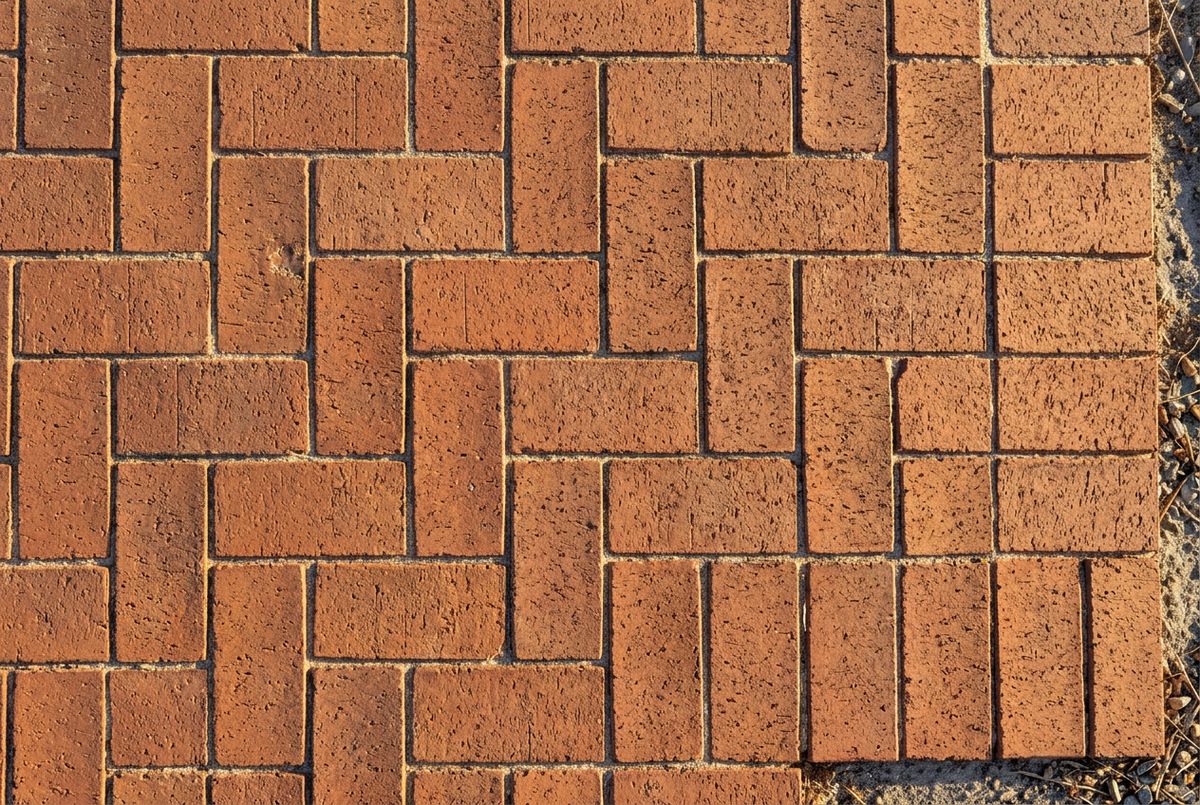
Basketweave is pairs of rectangular pavers laid side by side, with each pair turned 90 degrees to the pair next to it. Two pavers make a square, the squares alternate direction across the field, and from standing height the surface looks woven. It is one of the oldest brick patterns there is.
There is an offset variant, where each row of squares is stepped by half a square, that some Perth suppliers show as offset basketweave. IBP Paving lays both as part of our brick paving in Perth and the wider paving services we offer.
Where basketweave suits, and where it does not
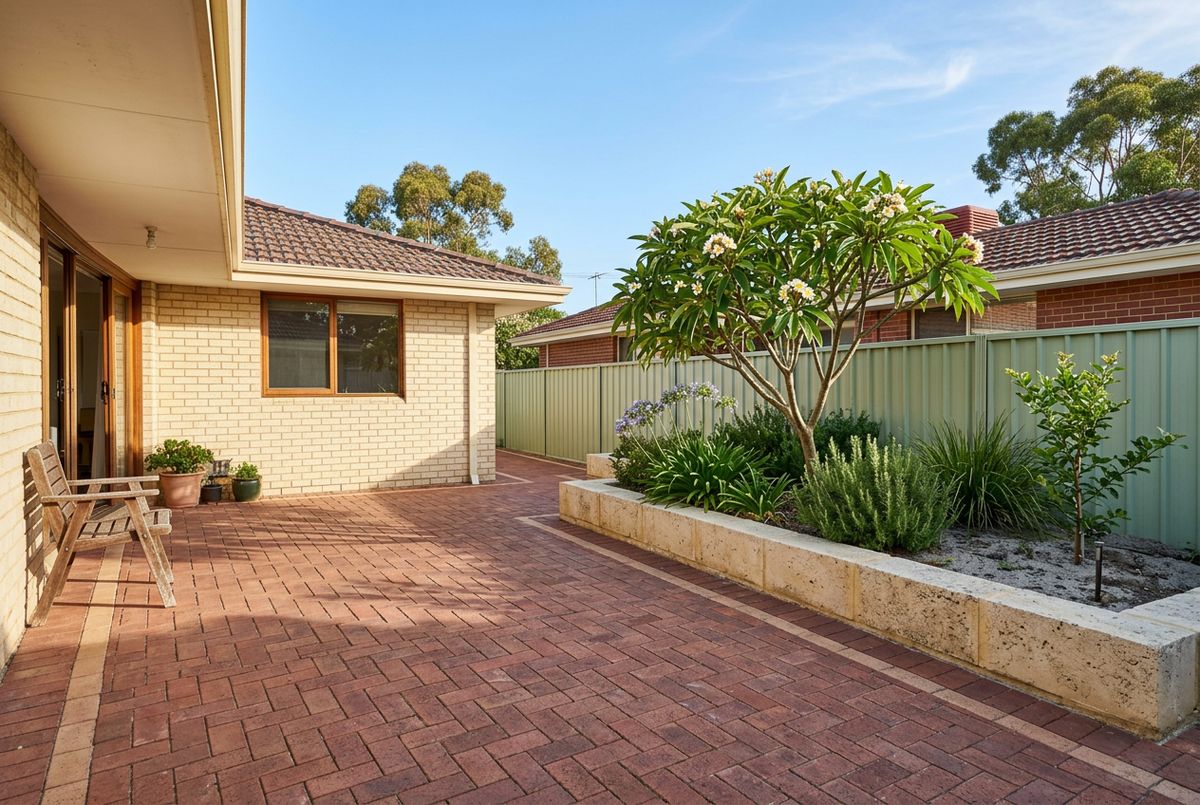
Basketweave reads as traditional, so it belongs with a house that is too. Courtyards, garden paths, patios and alfrescos behind older brick homes are where it looks right, and those areas only ever carry feet.
It does not belong on a driveway. Of the three common brick patterns it has the weakest interlock: its joint lines run straight through in both directions, so a turning tyre can push pavers along a joint and rut the surface. Anywhere a car drives or turns we lay herringbone instead.
The Perth suburbs where the pattern fits the house are the mature ones. Morley was built up in the 1960s. Dianella runs from modest post war homes to large modern two storey builds. Balga and Girrawheen are 1960s and 1970s State Housing stock, and Scarborough still has its 1930s to 1960s cottages between the rebuilds. These are also the suburbs where full paving replacements are now common, because the original paving has reached the end of its life; see paving replacement if that is where your job starts. For the applications themselves see patio and alfresco paving, courtyard paving and garden path paving.
Which pavers work for basketweave
The pattern only closes if two paver widths equal one paver length. That makes a true 2:1 format compulsory. The classic is the 230 x 115 mm clay paver, such as Midland Brick Heavy Duty Clay Pavers in Red and Golden Dune. 200 x 100 mm concrete pavers also work and give a crisper, more uniform square.
Clay pavers carry a little size variation from piece to piece, which is part of their character but also opens the joints where two pavers meet one. We allow a slightly wider joint for clay so the squares stay true across the whole field. Recycled and reclaimed clay pavers are often asked for with this pattern because they suit the heritage look; sizes vary more again, so they need sorting before they are laid. Our guide to paver brands in Perth covers the current clay and concrete ranges.
How IBP lays basketweave on Perth sand
The build under basketweave is the same flexible method as any brick paving on Perth's free draining sand: compacted sub grade, washed yellow paving sand screeded to a fall of 1:60 to 1:80 away from the house, 2 to 3 mm joints, a border course on every free edge, then plate compaction and joint sand swept in.
The pattern adds three points of its own. We set out from a square corner so the squares stay true. We check the pair module against the actual paver batch before laying, since the pattern depends on two widths matching one length. And we run a soldier or stretcher border around the field to take the few cuts there are. Basketweave has the fewest cuts of the three brick patterns, because the squares meet a straight edge without any diagonals. There is more on the base in our post on paving bases on Perth sand.
What basketweave costs
These are indicative Perth industry ranges, not IBP's price list. Published 2026 Perth cost guides put concrete pavers at about $75 to $110 per square metre supplied and laid and clay brick pavers at $130 to $210. The same guides apply a 10 to 15 per cent labour uplift to cut heavy patterns. Basketweave is not cut heavy, so expect the base band rather than the uplift. We quote every job on site. The bands are kept current in our Perth paving cost guide. To get a figure, request a free site measure or call 0449 020 336.
Basketweave or another pattern
Herringbone for anything a car drives on. It interlocks in two directions and is the Perth driveway pattern.
Stretcher bond for a plain, modern surface on paths and alfrescos, especially with large format pavers that cannot be laid in the other two patterns.
Basketweave when the house is older, the area is foot traffic only, and you want the pattern to look like it has always been there. Our illustrated pattern guide shows all three side by side.